
Today, 6th June, marks the 80th anniversary of the Allied forces D-Day landings, Operation Overlord, on the Normandy coast, the largest ever wartime seaborne invasion landings, and the subsequent Battle of Normandy lasting until 30th August 1944, that brought about the start of the end of the Second World War. We rightly commemorate bravery of the 156,000 allied troops involved and the as many as 4000 young men that fell to bring about the liberation of France and ultimately Europe some 11 months later.

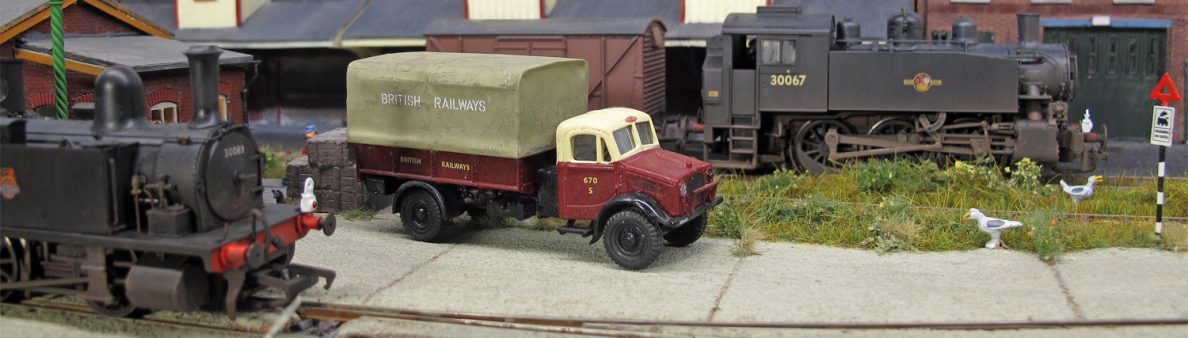
It should also be remembered that D-Day was not just about one day but an incredible amount of planning and logistics both leading up to and for the many months that followed to ensure that men and machines, munitions, supplies and materials were in the right place at the right time to ensure success. Whilst much is reported about the 6000 plus ships and vessels that sailed across the channel, it was very much the railways of the time that played a big part in these logistics supplying the many south coast posts such as Portsmouth, Southampton, Poole and Portland. The Southern Railway was of course at the forefront of these logistics.

For example to build the temporary ‘Mulberry’ harbours, Designed by Major Allan Beckett of the Royal Engineers, that were built over six months off the Normandy coast by around 55,000 workers used 210,000 tons of steel, 1,000,000 tons of concrete. All these materials would have arrived at the coast ports for loading onto vessels by rail. This construction still stands as one of the greatest civil engineering feats of modern times.
The Southern Railway reported, later that year, at its 1944 Annual General Meeting that some £1,000,000 was spent on the additional sidings and equipment necessary to meet the needs of Operation Overlord. During 1944 over 26,000 special trains were run, with over 550,000 on duty service personnel carried.
Some of these special trains were run as decoys carrying dummy loads, as part of the D-Day deception plan that was codenamed Operation ‘Fortitude’, into South East England to fool the Germans into thinking that the Allies would launch an attack across the channel from the SE ports. One driver of such a train when wondering why the movement of an apparent load of tanks was achieved so easily, sneaked a look under one of the covers to find a wooden tank underneath!
Eighteen of the Company’s steam ships and their ‘modern’ train ferry ships also played an active part. All of this took place whilst maintaining a practically normal level of standard service trains to allow the civilian population to move from home to work as usual.
Lest we forget not just the young brave military personnel but also the dedication and efforts of the railway workers that worked tirelessly, in all too often difficult and life threatening conditions themselves, indeed many did also fall, to ensure the success of Operation Overlord and the subsequent Battle of Normandy.
Thank you Graham. A well researched piece which added considerably to my knowledge of this amazing achievement. Such a brave generation.
A thank you in respect of the debt of gratitude future generations owe to all those who make operation Overlord happen.
Also to Graham for his excellent post.